
Prevention is Better than Cure
Healthy habits learned at school protect children long before dental problems begin.
Prevention is better than cure
School Oral Health Programs
In India, nearly 1 out of every 2 people face dental problems — many of which begin in childhood and could have been prevented.
A healthy mouth is the gateway to good overall health. Pain, infection, and poor oral habits in childhood do not stop at the teeth — they affect how children eat, sleep, learn, feel about themselves, and grow. Waiting until a child is in pain is already too late for the simplest lessons.
Our aim
We regularly conduct oral health awareness programs in schools and colleges — from pre-kindergarten to college students. Sessions cover oral hygiene, correct tooth brushing, and the harmful effects of bad habits such as pan masala chewing (which is rampant in Gujarat), smoking, and other tobacco use — so young people understand these risks before habits take root.
When a school or college chooses to run an oral health program, it chooses prevention over cure: fewer painful days, stronger habits, and a generation that carries care into their families and communities. Together, educators and health teams can strengthen the health of society, one student at a time.
- Guiding ideaPrevention is better than cure
- We reachPre-K to college students, regularly
- BeliefHealthy mouth → gateway to good health
- Know morePlease mail us
PREVENTION IS BETTER THAN CURE
Importance of School Oral Health Programs
If almost every second person in India struggles with dental issues, waiting for treatment later is not enough. Schools are where habits are formed early — so problems are prevented before they need to be cured.
Prevent, Don't Wait
Early awareness and daily habits stop many dental problems before they cause pain or infection.
Better Learning
Preventing tooth pain keeps children focused in class — comfort supports attendance and confidence.
Health for Every Child
School programs share preventive knowledge with all children — not only those who already have a problem.
Overall Wellbeing
Preventing oral disease supports nutrition, sleep, speech, and general health for life.
FROM PRE-K TO COLLEGE
What Our Regular Programs Cover
We regularly conduct age-appropriate sessions in schools and colleges — helping students build good habits early and stay away from harmful ones.
Oral Hygiene
Everyday mouth care explained simply — so students know why clean teeth and gums matter for overall health.
Tooth Brushing
Correct brushing technique with hands-on demos — habits that last from early childhood into college years.
Harmful Habits
Open talk on bad habits that damage teeth, gums, and general health — before they become lifelong patterns.
Pan Masala & Tobacco Chewing
Pan masala and related chewing habits are rampant in Gujarat. We discuss how these harm the mouth, teeth, and body — and why saying no early matters.
Smoking & Other Risks
Age-sensitive awareness on smoking and tobacco use — linking oral health with breathing, heart health, and long-term wellbeing.
WAYS A SCHOOL CAN HELP
Options for Schools to Conduct a Program
Each option is built around prevention — helping children learn and stay healthy early, rather than waiting for problems that need to be cured later.
Oral Health Screening Day
A gentle on-campus check so concerns are noticed early — before small issues grow into pain that needs treatment.
- Simple oral check for each student
- Notes on common concerns for awareness
- Parent-friendly summary to share at home
- Fits well with annual health days
Oral Health Education Workshop
Interactive sessions for students (and optionally teachers or parents) on oral hygiene, tooth brushing, diet, and harmful habits such as pan masala chewing and smoking — framed for the age group, from young children to college students.
- Age-appropriate demos and Q&A
- Brushing technique & oral hygiene
- Awareness on pan masala, smoking & tobacco
- Ideal as a standalone awareness day
Screening + Education Together
Check oral health and teach habits on the same day — so children learn how to prevent problems, not only how to notice them.
- Campus screening with education sessions
- Focus on prevention and daily habits
- Teacher briefing on common concerns
- Strong balance of awareness and care
Year-Round School Awareness
A thoughtful year-long rhythm of visits — so prevention stays part of school culture, not a one-time reminder after trouble begins.
- 2–3 planned visits across the academic year
- Ongoing awareness for students & staff
- Simple progress notes for the school
- Builds lasting healthy habits over time
FROM SCHOOL SESSIONS
Prevention in Action
Moments from on-campus programs — teaching children how to care for their mouths today, so they need less curing tomorrow.
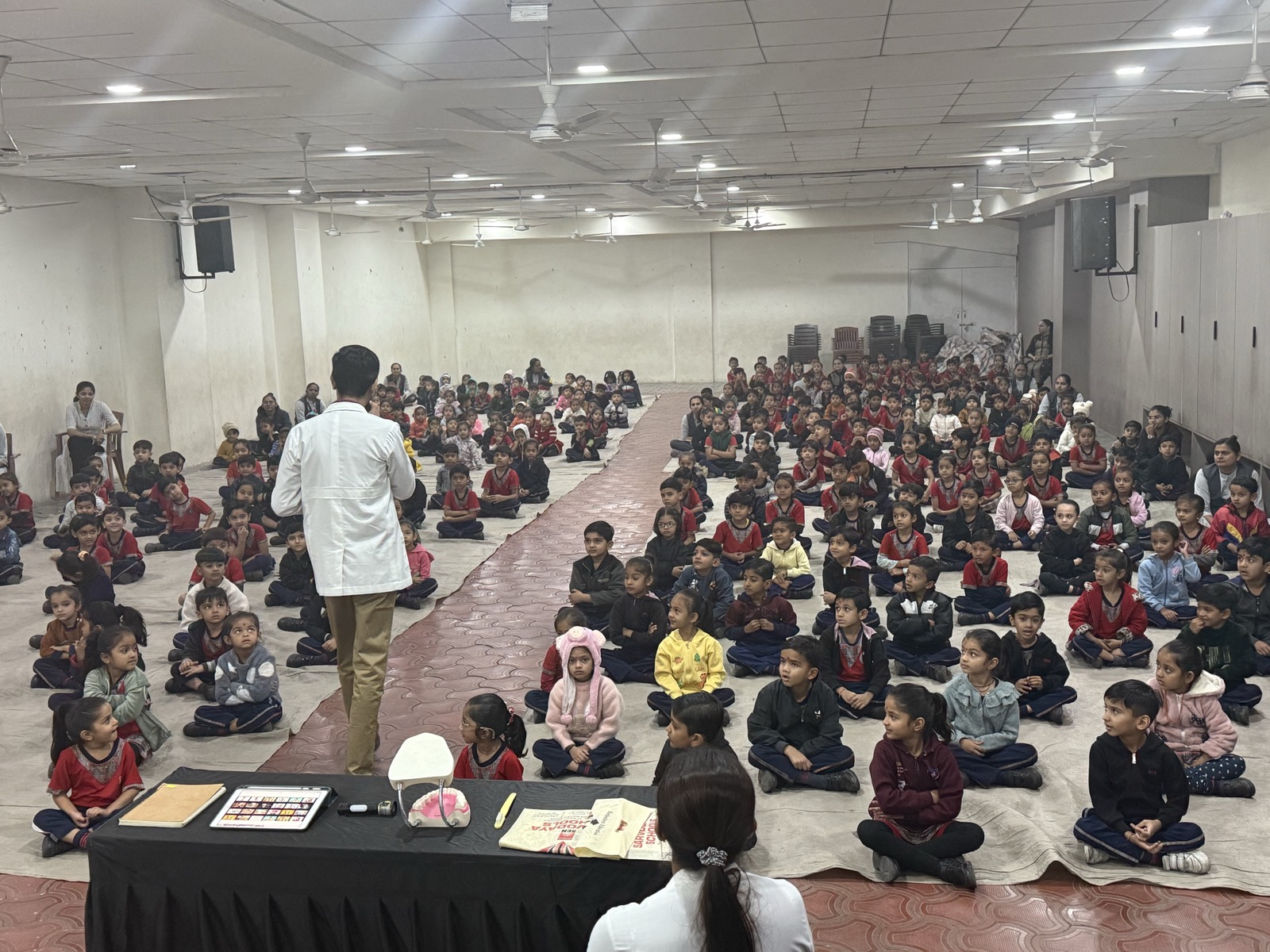
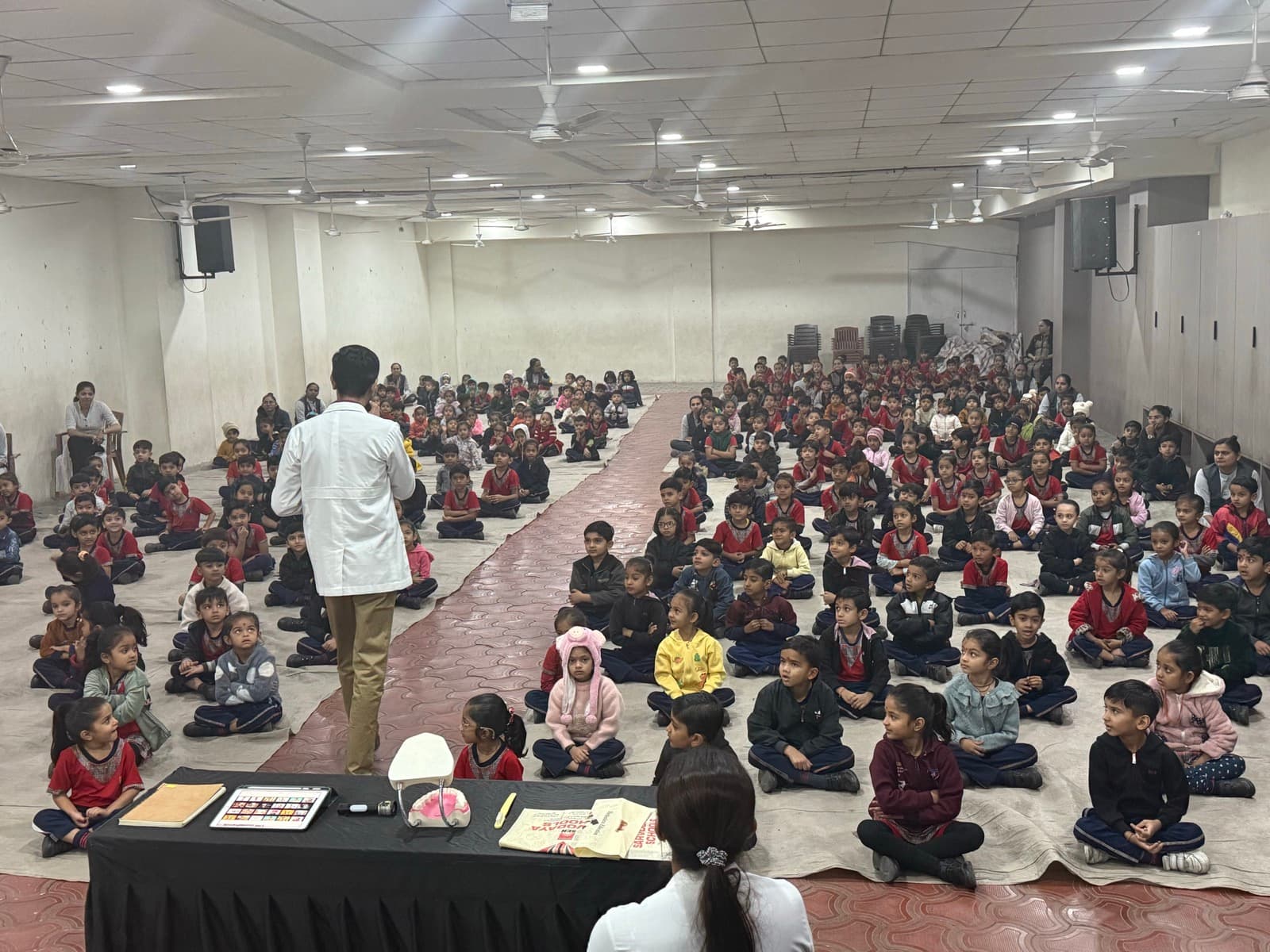
Full-hall oral health session with live brushing demonstration tools
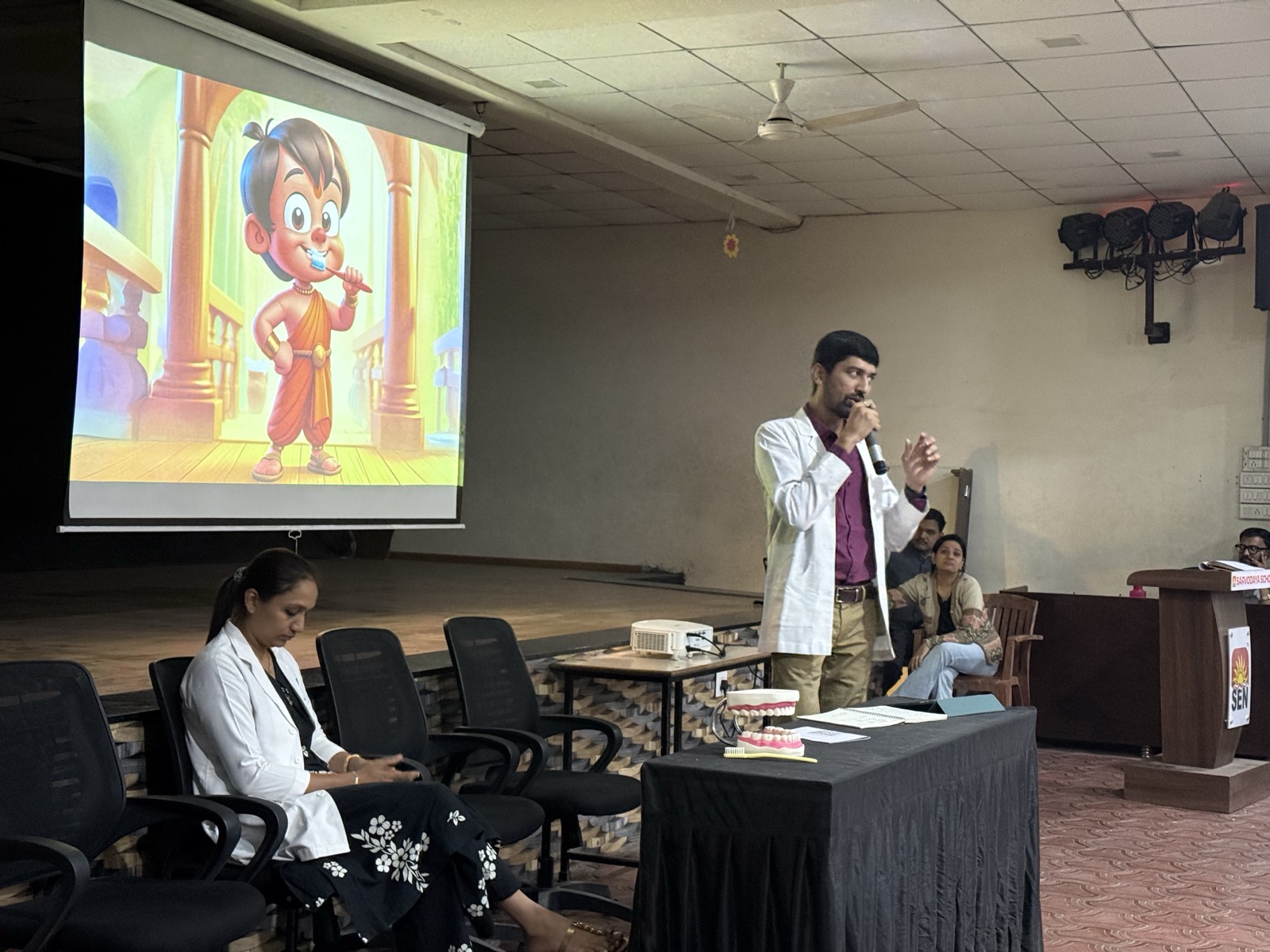
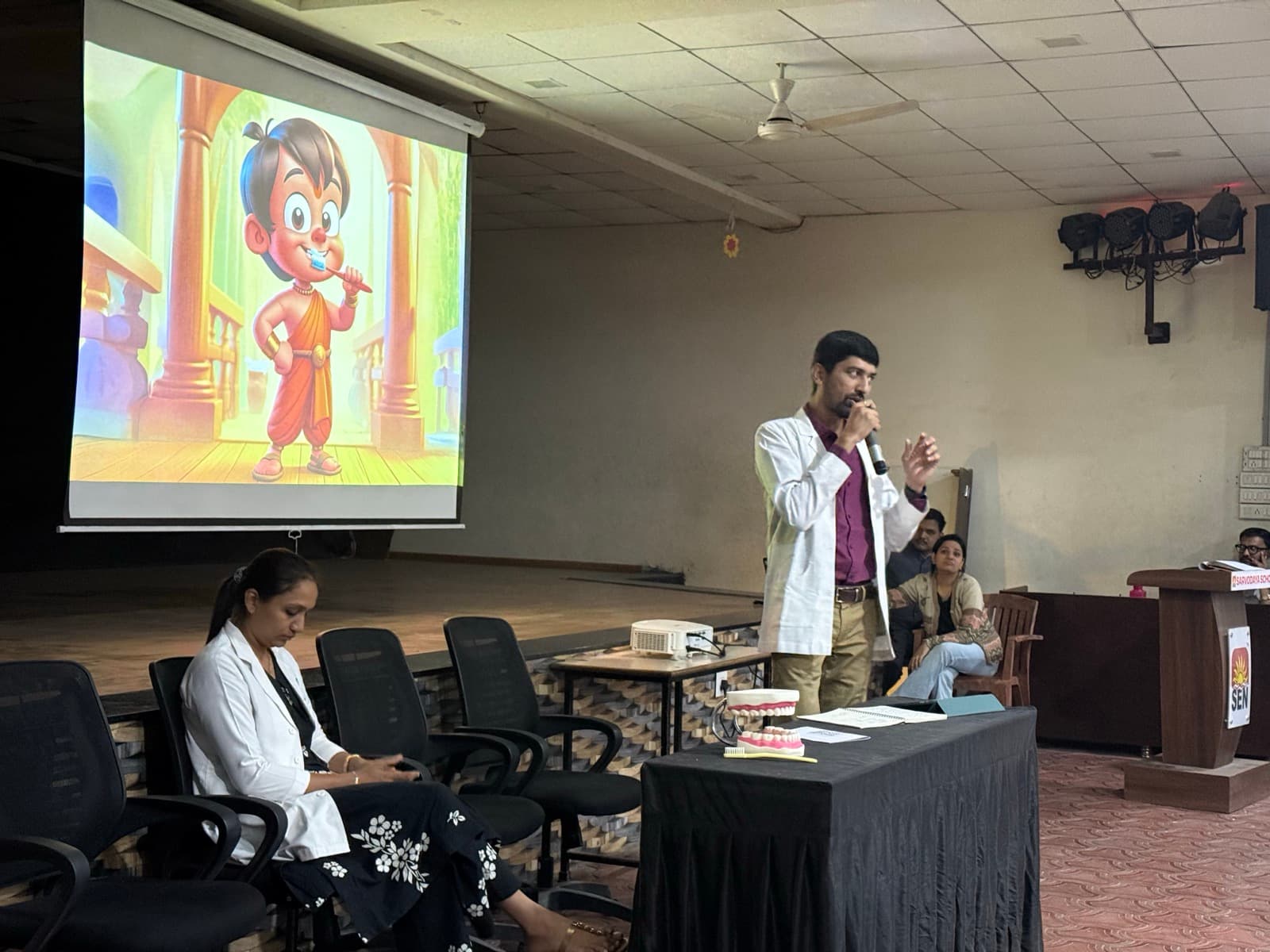
Hands-on demo with teeth model & oversized brush
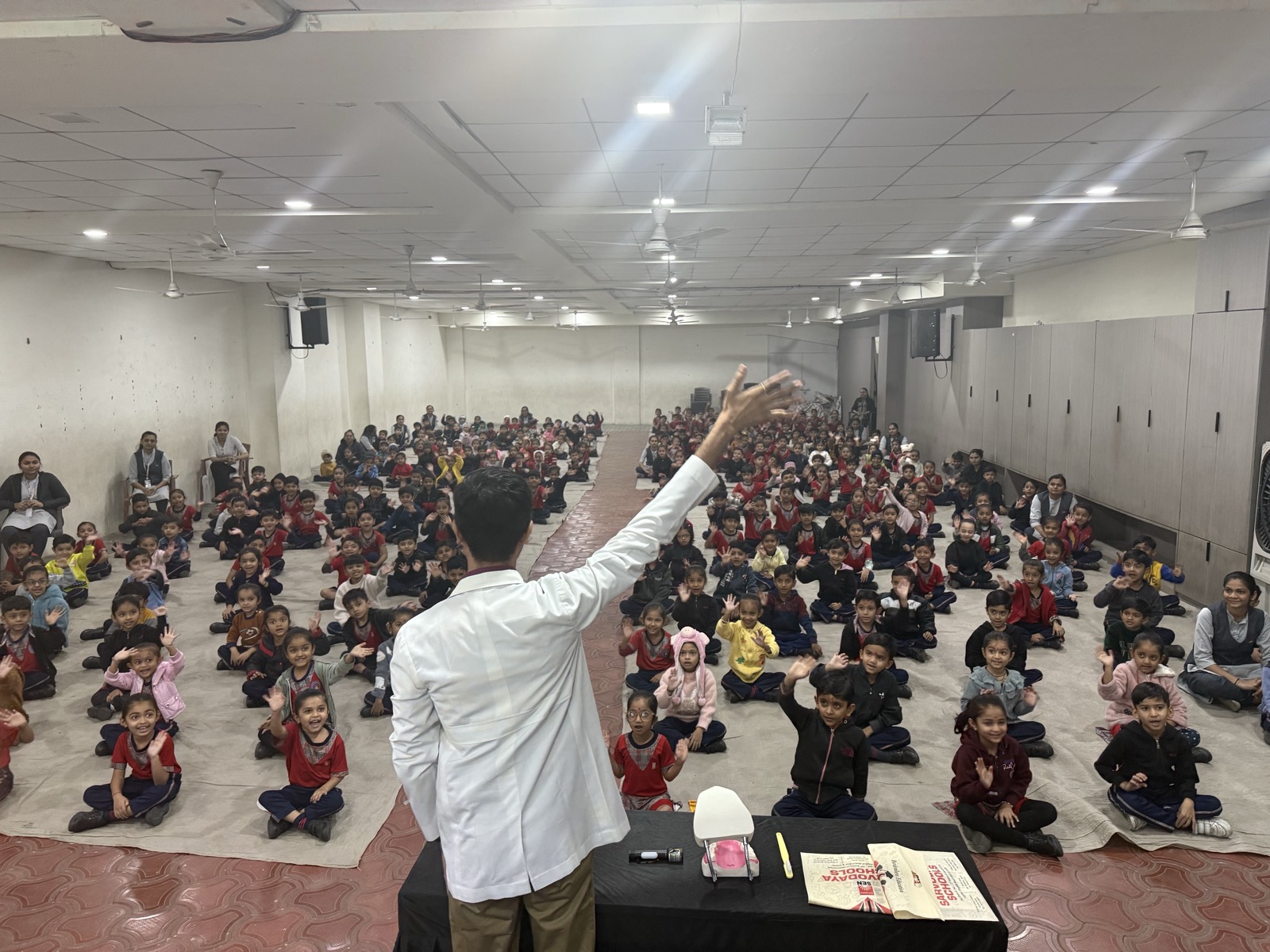
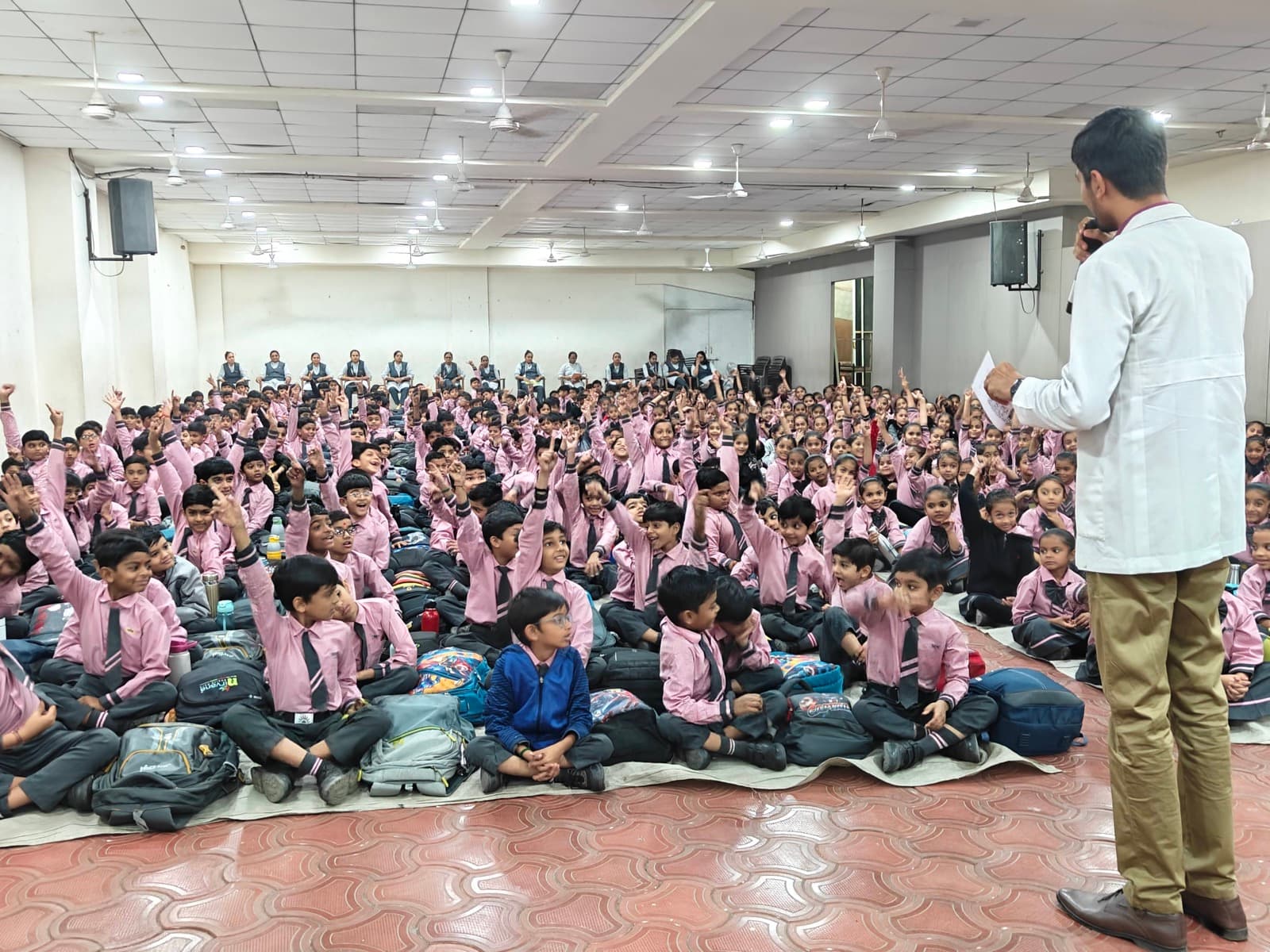
Interactive Q&A — kids raising hands and participating
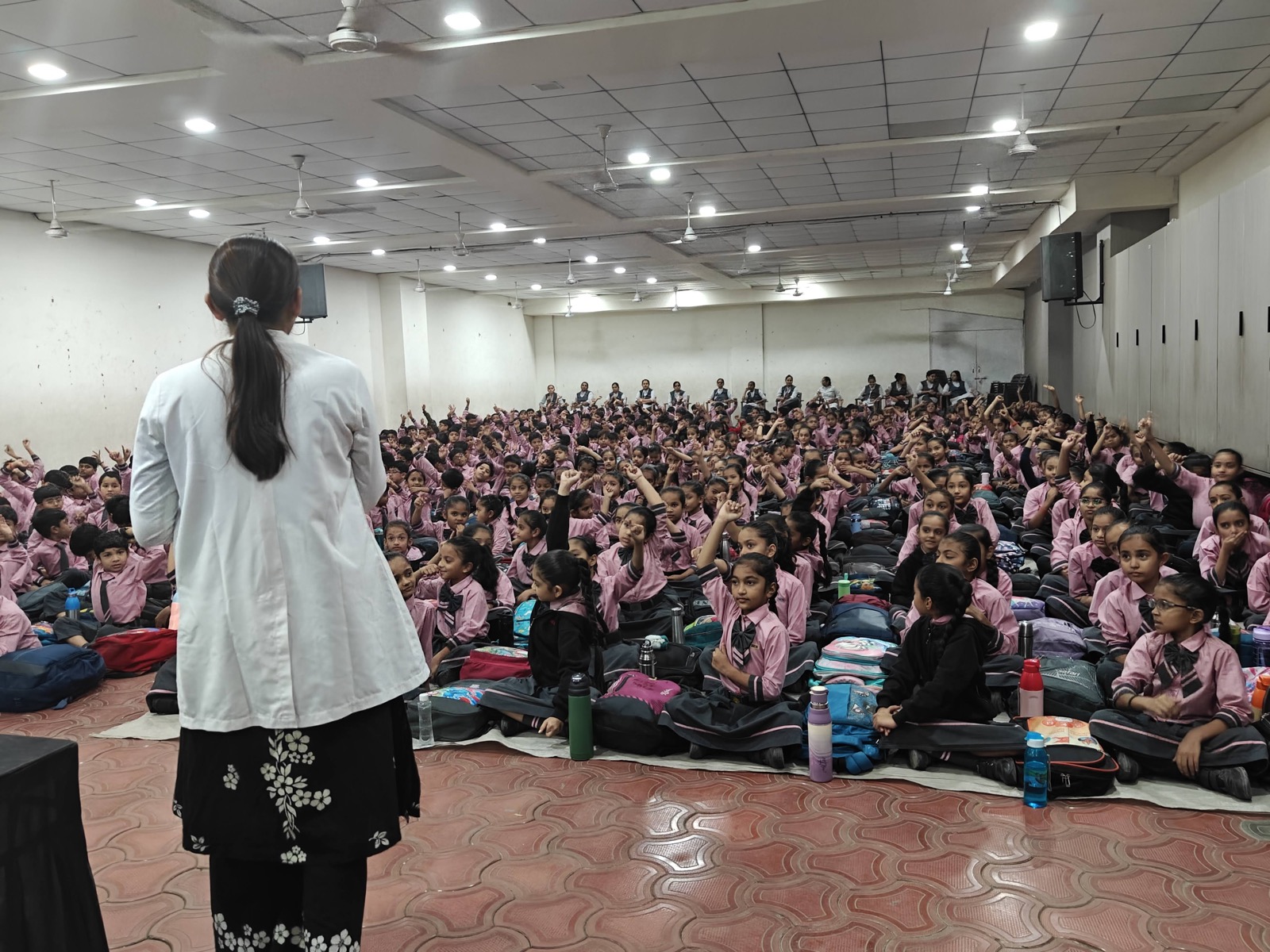
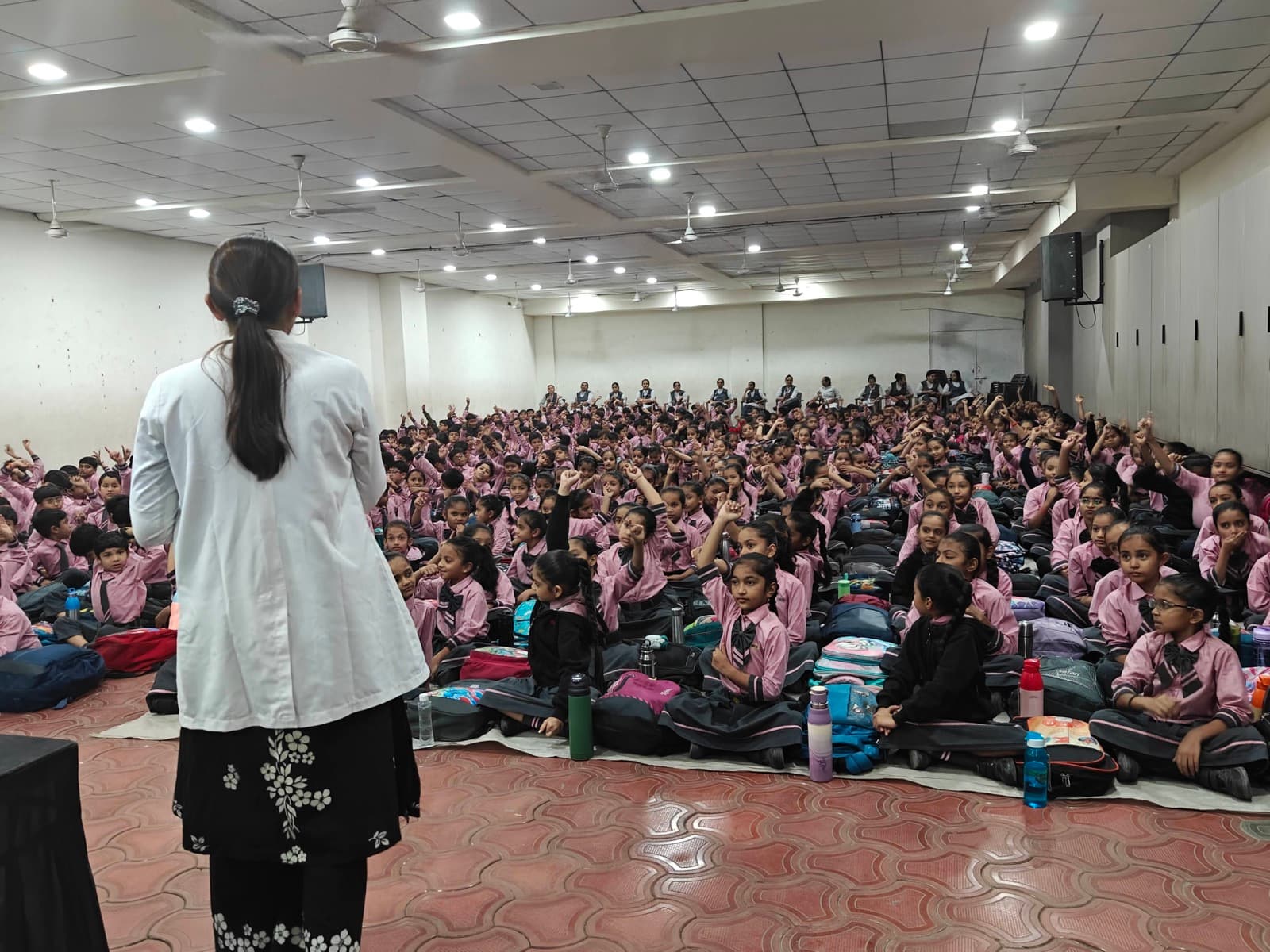
Education session led by our dental team
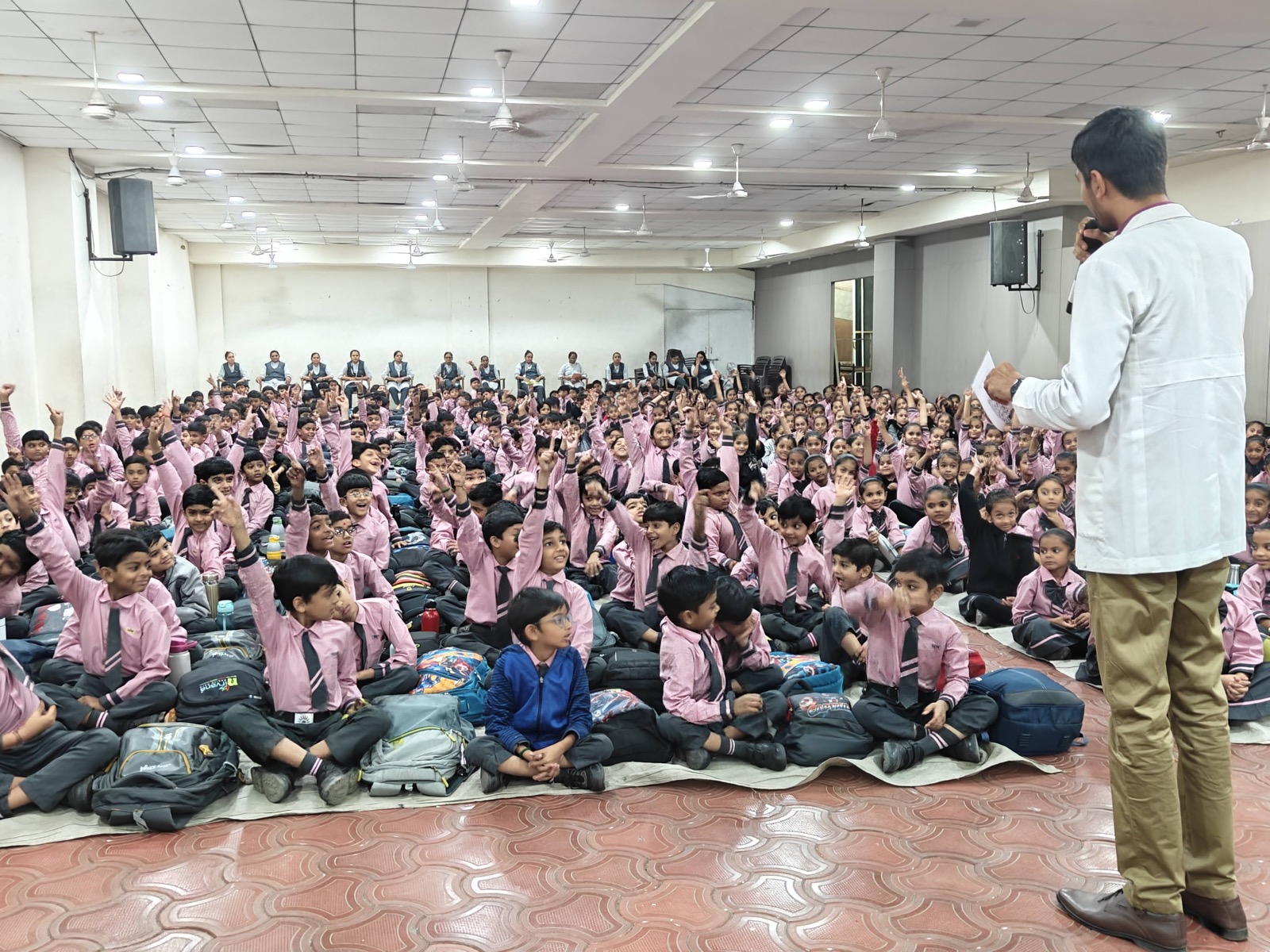
Engaged students during an awareness assembly
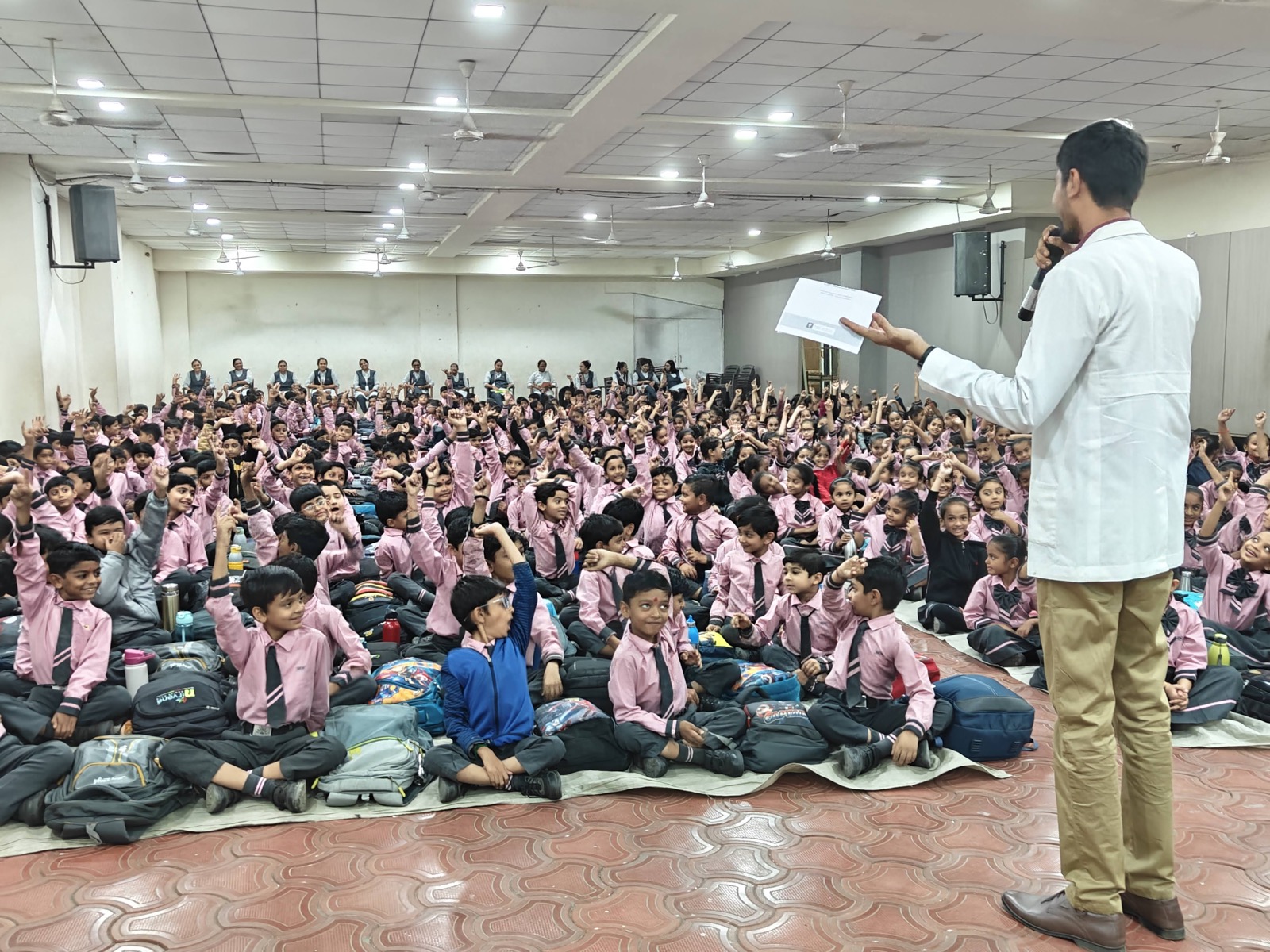
Campus assembly focused on healthy oral habits
A SIMPLE WAY FORWARD
How a School Can Begin
Share a few details about your school — the program can be planned around your timetable, with prevention and student wellbeing at the centre.
Write to Us
Mail us with your school name, location, and approximate student count.
Choose a Format
Pick screening, education, both together, or year-round awareness based on your goals.
Plan Together
Dates, consent notes, and classroom flow are planned with your staff — with minimal disruption.
Learn & Share
The session happens on campus; early findings and habits are shared so families can prevent problems before they grow.
Prevention is better than cure. If your school would like to know more about an oral health awareness program for students, please mail us.
FAQ
Frequently Asked Questions
Why should a school run an oral health program?+
Because prevention is better than cure. Tooth decay is common and largely preventable. School programs help children learn early, spot concerns before they cause pain, reduce absences, and connect oral health with overall wellbeing — for a healthier classroom and society.
What options can our school choose from?+
You can choose an oral health screening day, an education workshop, screening and education together, or year-round awareness visits — all focused on preventing problems early. The plan can be shaped around your student strength and school calendar.
How long does a screening camp take?+
It depends on student numbers and how classes are scheduled. Many schools complete a screening day in a half-day or full day, planned batch-wise so teaching disruption stays minimal.
Is this program about dental treatment?+
No. School programs focus on awareness, screening, and education — helping children prevent problems early. If a concern is noticed, families simply receive clear information so they can decide how and where to seek care, if needed.
Is parental consent required?+
Yes. A simple information / consent note can be circulated with the school so parents know what the session includes and how findings will be shared.
Which age groups do you cover, and what topics?+
We regularly conduct programs for pre-kindergarten through college students. Topics include oral hygiene, correct tooth brushing, and harmful habits such as pan masala chewing (common in Gujarat), smoking, and other tobacco use — explained in an age-appropriate way for each group.
How can our school know more or get started?+
Please mail us at aarogyam52@gmail.com with your school name, location, approximate student strength, and preferred dates. We will share suitable awareness options and plan the next steps with your coordinator.